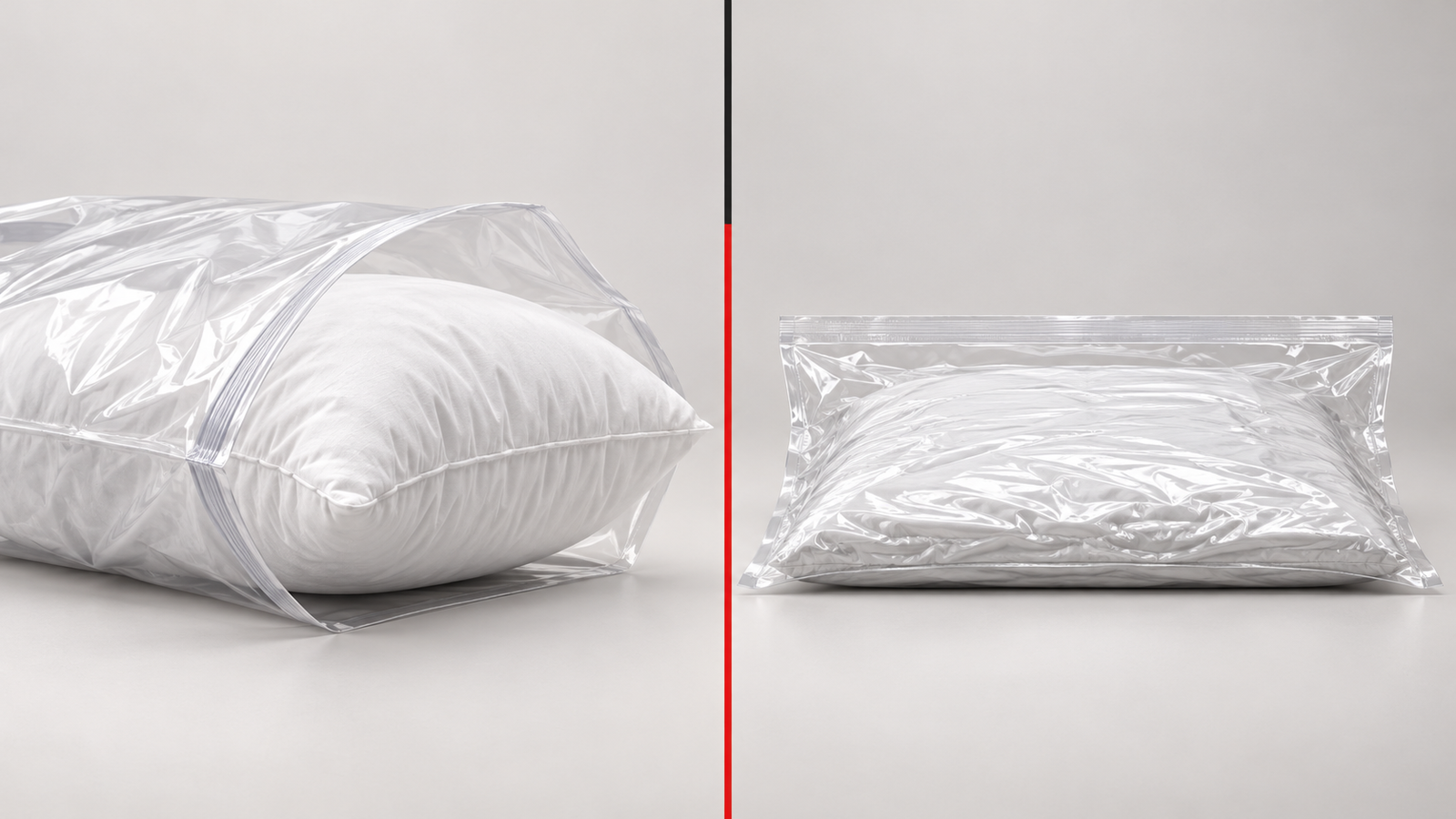
When bedding is too bulky for a planned package, buyers may search for a compression bagging machine or a vacuum sealing machine as though the terms mean the same thing. They do not. Both can reduce the space a fluffy product occupies during packaging, but the equipment may perform different steps and produce different finished packs.
For a bedding factory, the useful question is not “Which machine compresses more?” It is “What package must leave this line, and what process will make that package repeatably with our products and materials?”
What a compression bagging machine does
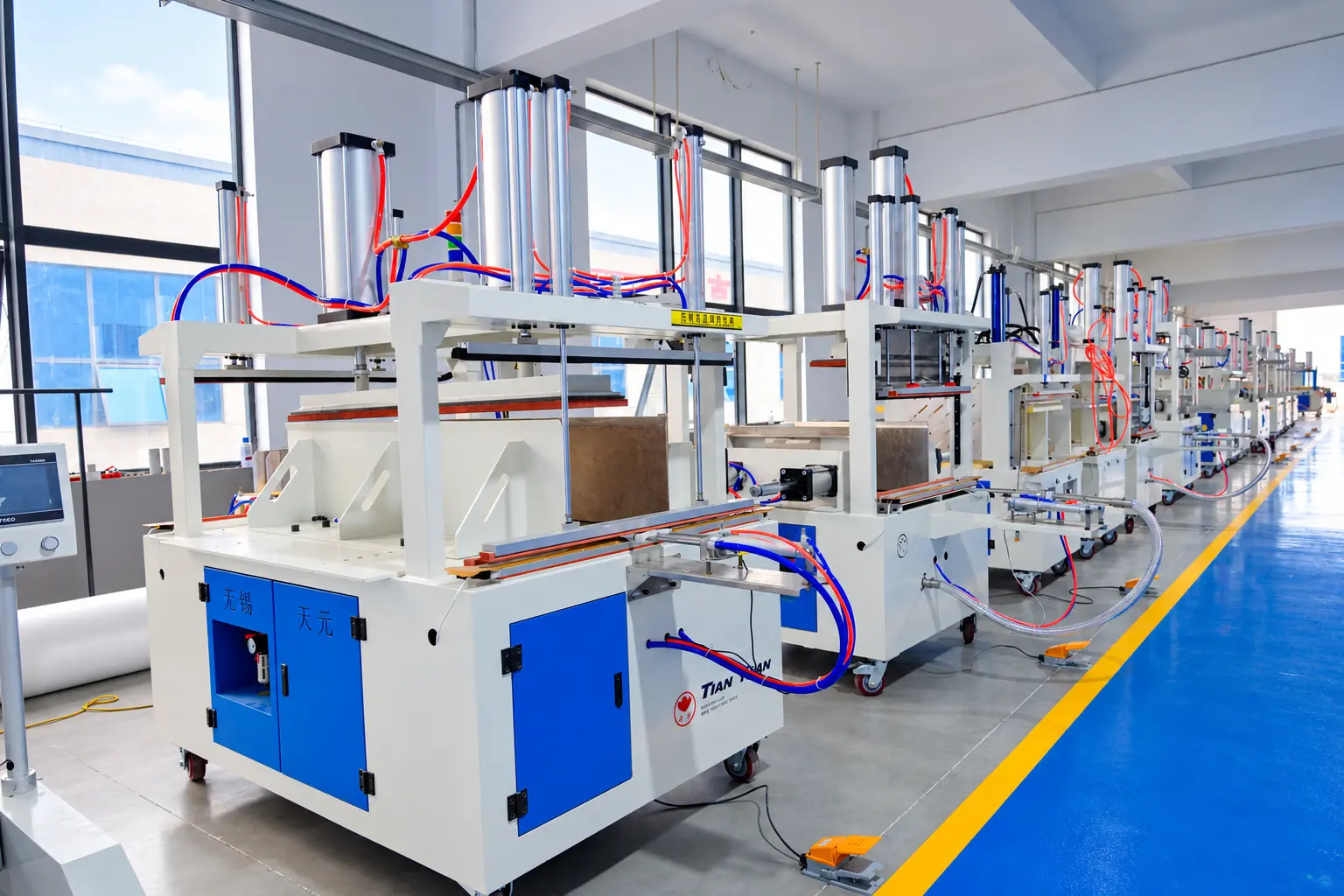
In Tian Yuan’s HFD-3000 and BZZDJ-1 descriptions, compression reduces the height of bulky products before bagging. The listed applications include pillows, quilts, cushions and clothing. This addresses the handling problem of getting a fluffy item into a planned bag size.
The exact workflow still needs checking. Ask whether bag positioning, insertion, closure and discharge are manual or included in the quoted line. “Compress bagging” on a product page does not, by itself, establish that the machine evacuates and heat-seals a bag.
What a vacuum sealing machine adds
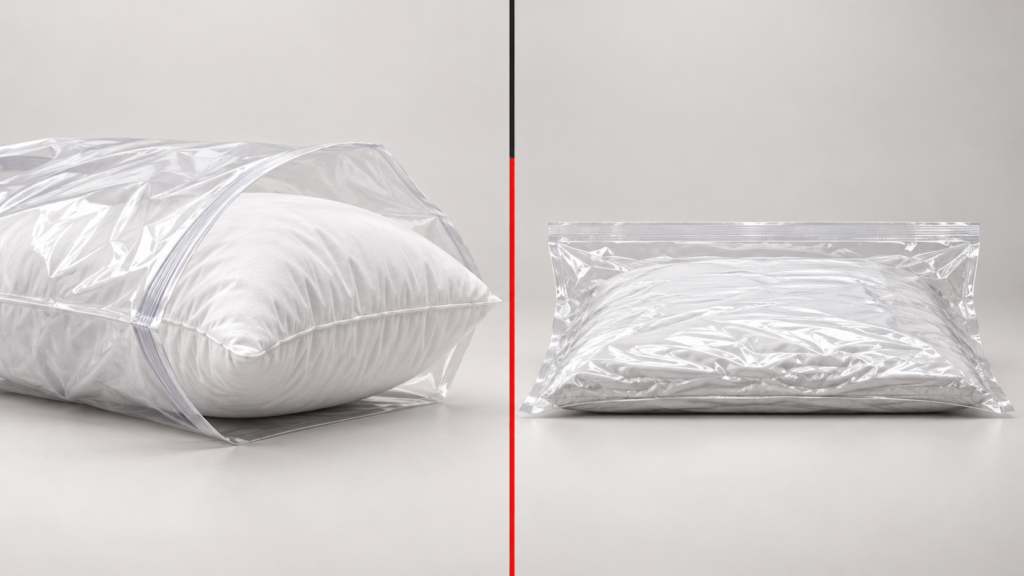
Tian Yuan’s HFD-880-C Vacuum Sealing Machine is listed for fluffy home-textile products including pillows and blankets. Its product description combines compression with vacuum extraction and heat sealing. That makes it a different process route when the specified finished pack is a sealed, evacuated package.
Vacuum sealing introduces additional package questions: Which film and bag construction will be used? Where will the seal sit? How will the team inspect it? What finished dimensions and product recovery are acceptable? The answer should come from a trial with the actual bedding item and packaging material. Avoid assuming that a particular film, fill material or product shape will work because another product did.
Compare the required process, not the machine label
| Decision point | Compression bagging | Vacuum sealing |
|---|---|---|
| Primary packaging step | Presses a bulky item to support bag insertion | Uses a vacuum-and-seal process as part of the finished package |
| Typical buying question | How do we bag this pillow or quilt? | How do we produce this specified evacuated, sealed pack? |
| Key material check | Bag opening, dimensions and handling | Film and seal compatibility, plus finished-pack integrity |
| Line-scope question | Who positions and closes the bag? | Which compression, vacuum, sealing and discharge steps are included? |
| Trial result to inspect | Insertion, appearance and size after bagging | Pack dimensions, seal quality, appearance and recovery after opening |
This comparison describes process choices, not a universal performance ranking. A machine that fits one pillow or quilt may need different settings or tooling for another product.
Match the process to the bedding product
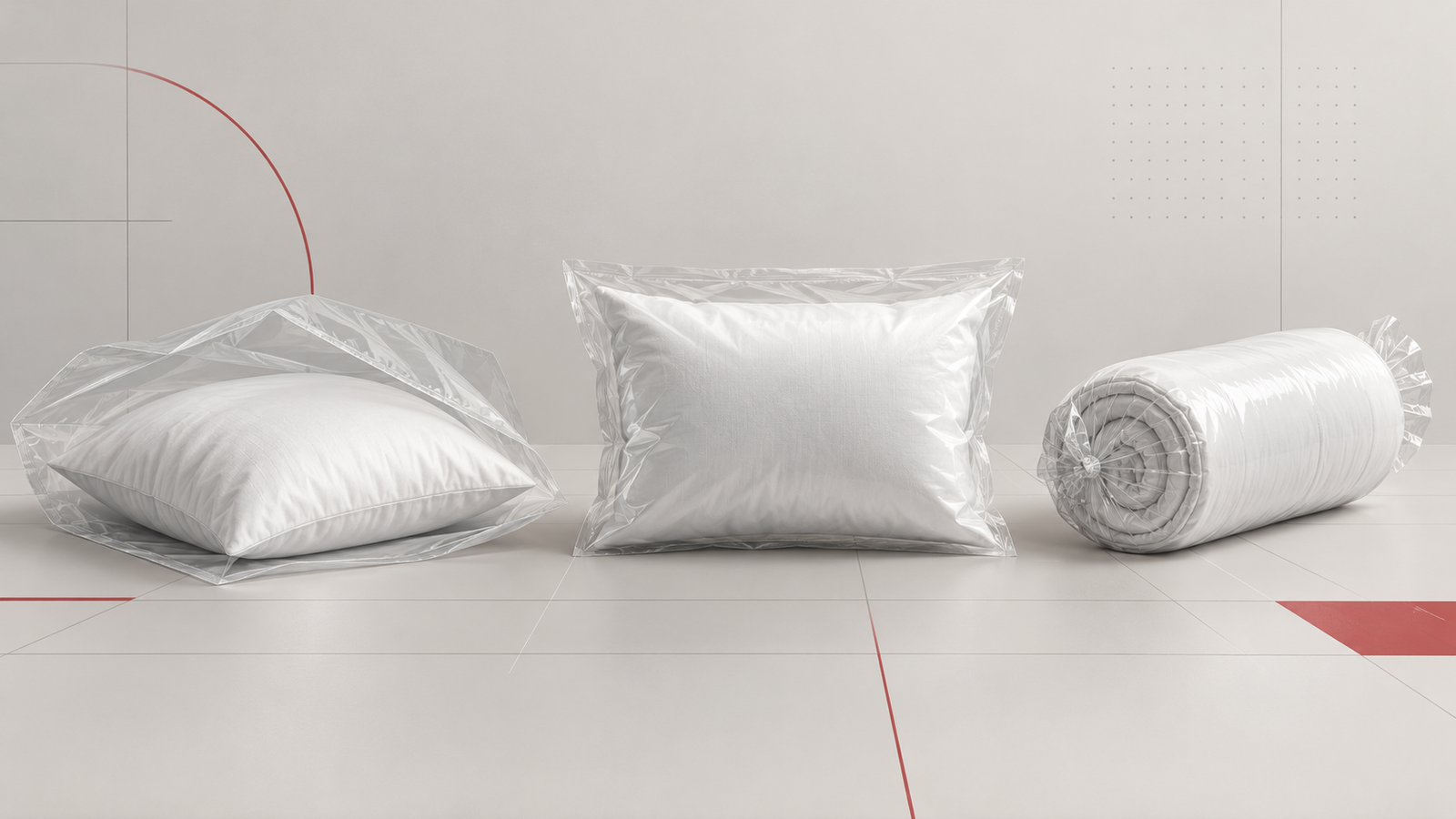
Pillows and cushions. Fill material, cover fabric and uncompressed height can vary widely. If bag insertion is the bottleneck, begin with a compression-bagging trial. If the customer’s package specification requires evacuation and a sealed barrier, test the vacuum-sealing route. Where a cylindrical final pack is required, a separate pillow rolling process may be more relevant than either flat-pack route.
Quilts and blankets. Record the unfolded or folded size, fill construction and planned bag dimensions. Ask how the item is presented to the machine and whether the package must remain sealed after processing. A sample that looks acceptable at discharge should also be checked after storage and after opening.
Mixed product lines. A factory packing several bedding families should supply more than one sample. Assess the proposed equipment against the full product mix, including the slowest or most difficult changeover, rather than only a demonstration sample.
Five items to include in an equipment brief
- Product data: item type, fill, cover, size range and any folding step before packing.
- Package specification: flat or rolled shape, bag or film material, target dimensions and closure or seal requirement.
- Production scope: product mix, planned shift pattern, upstream feed and downstream packing or inspection steps.
- Site conditions: floor plan, electrical supply, compressed-air availability and any layout restrictions.
- Acceptance test: samples to run, how to measure the finished package and when to check recovery or seal quality.
These details help a supplier propose a complete process instead of quoting a machine against an ambiguous keyword. Ask for the included and excluded steps in writing, especially where operators will still handle bags or finished packs.
Questions to ask during a sample trial
- Does the proposed process make the required package with the actual product and film?
- Is the bag easy to present and close after compression?
- If vacuum sealing is required, is the seal position and integrity acceptable?
- What happens to the package after a defined storage period?
- Does the bedding item recover acceptably after opening?
- How do settings and handling change across the product range?
Record the material, settings and result for each sample. Tie any throughput estimate to that tested setup and the full line scope rather than treating it as a blanket promise for every bedding product.
Frequently asked questions
Does compression bagging always include vacuum sealing?
No. On Tian Yuan’s product pages, compression bagging and vacuum sealing are named as different machine categories. Confirm each proposed machine’s actual steps before ordering.
Is vacuum sealing automatically the better option for export bedding?
There is no universal answer. Use the customer’s package requirement and a product-and-film trial to decide. Bagging may address the handling problem; vacuum sealing may be needed when the finished specification calls for an evacuated, sealed pack.
Can the same process handle pillows and quilts?
Some Tian Yuan model pages list both as applications, but compatibility and settings must be checked with representative samples. Do not infer that every size, fill or bag will produce the same result.
If you mainly package pillows, compare flat and rolled equipment in the pillow packing machine buying guide. Before ordering, use the pillow compression packaging sample-test checklist to define a measurable acceptance result.
Request a process recommendation
Review Tian Yuan’s compression packing machines and send the team your bedding samples, bag specification and floor plan. You can contact Tian Yuan to discuss whether compression bagging, vacuum sealing or a different packaging route should be tested for your line.